Scottish Grand National 2026 Trends Guide: Who Will Win in 2026?
CLICK HERE for the 2026 Scottish Grand National Runners
A Proper Test of Staying Power at Ayr
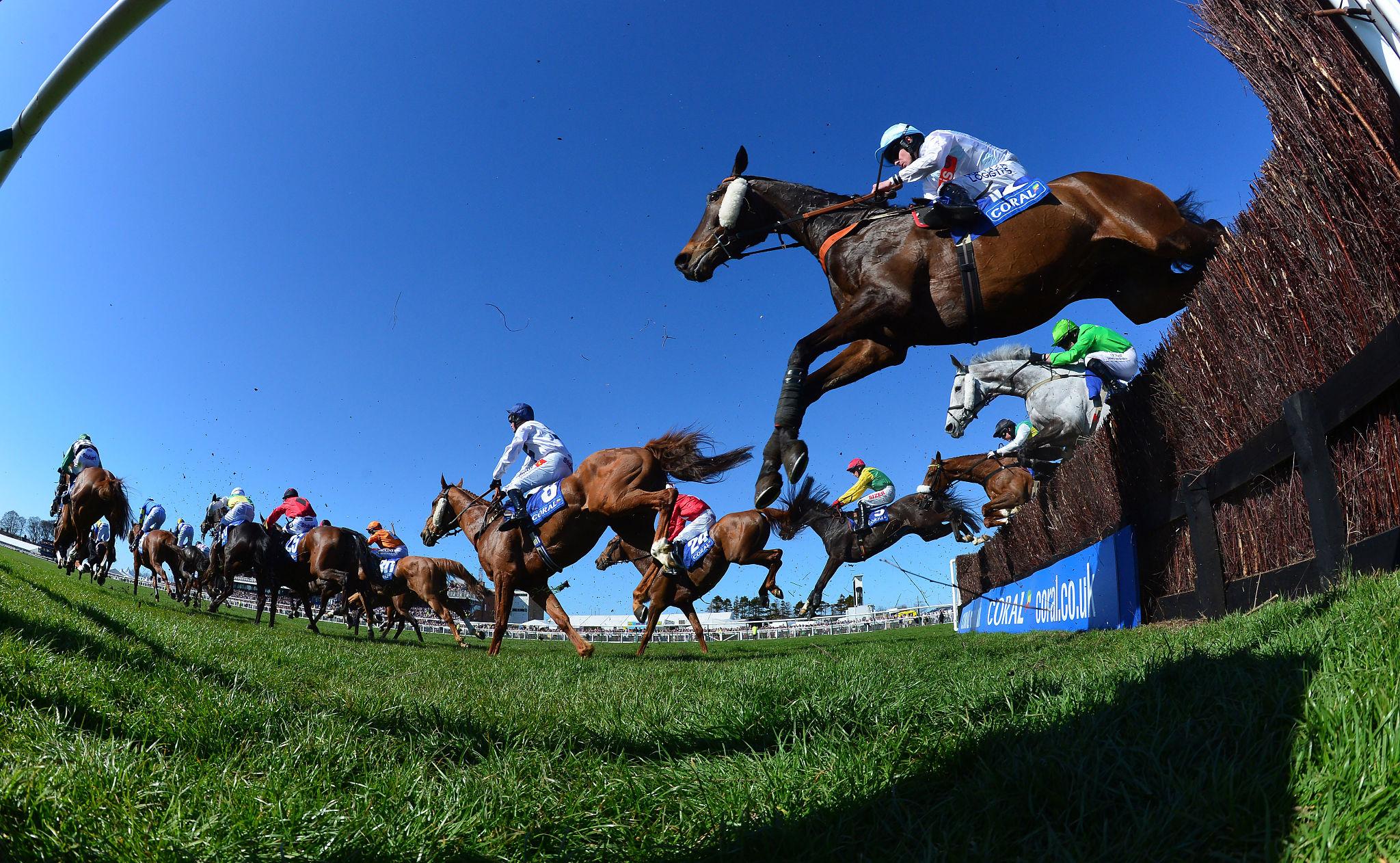
There are few spectacles in British racing that quite match the stamina-sapping drama of the Scottish Grand National at Ayr. Every spring, punters, dreamers and those who just fancy a flutter gather around the same question: who will win the Scottish Grand National 2026?
It’s a race that doesn’t just test speed or class, but something far more old-fashioned—grit. The sort of grit that leaves horses and jockeys looking like they’ve just completed a cross-country expedition rather than a day at the races. And if you’re hoping to crack the puzzle this year, history—thankfully—offers a few rather telling clues.
So, rather than plucking a name out of thin air (or worse, following your mate Dave’s “absolute certainty”), let’s dig into the trends that have shaped this race over the years.
Weight: The Unforgiving Burden
If there’s one thing the Scottish Grand National has consistently shown, it’s that weight is not your friend. In fact, it’s more like that one relative who insists on staying too long and eating all the biscuits.
This year’s renewal doesn’t exactly scream top-class quality, particularly with Blaze The Way sitting at the top of the weights off a mark of just 145. That alone tells you something about the field.
The Irish challenger faces a stern task lugging 12 stone—a burden that history suggests is about as welcome as rain on a bank holiday. Only one horse since the days of Red Rum in 1974 has managed to defy more than 11st 10lb, and that was Grey Abbey, a horse who clearly hadn’t read the script.
More recent history paints a similar picture. Vicente carried 11st 10lb to victory in 2017, while Captain Cody managed 11st 14lb just last year. But these are exceptions, not the rule. The overwhelming majority of winners—16 of the last 22—have carried 11 stone or less.
And then there’s the curious case of horses running from out of the handicap. Since 1982, a remarkable number have managed to win despite technically being “wrong” at the weights. It’s enough to make you wonder whether the handicapper is sometimes just guessing.
Novices: Youthful Energy Pays Off
If weight is the anchor, then youth is the engine.
Novice chasers have built a formidable record in this race, and the trend shows no sign of slowing down. When Godsmejudge triumphed in 2013, he became the eighth novice winner in two decades—a statistic that raised a few eyebrows at the time.
Since then, the likes of Vicente, Joe Farrell, Mighty Thunder, Macdermott and Captain Cody have all reinforced the notion that inexperience—at least in terms of chasing—can actually be an advantage here.
It’s not entirely surprising. First-season chasers often arrive with fewer miles on the clock and a touch more enthusiasm than their battle-hardened rivals. They may lack polish, but they more than make up for it with stamina and resilience.
This naturally brings attention to runners like King Of Answers and Quebecois. Both fit the novice profile, but there’s a catch—they’re burdened with hefty weights, which, as we’ve already established, is rarely a recipe for success.
Kim Roque, on the other hand, looks a more intriguing candidate. Set to carry 10st 13lb, he ticks the weight box nicely. At six years old, he’s still relatively young, though that hasn’t stopped others before him. Macdermott, after all, won this race at the same age in 2024.
Form Matters—Especially Late in the Season
By the time the Scottish Grand National rolls around, the racing season is running on fumes. Horses that have lost their form rarely rediscover it at this stage—rather like trying to get fit the week before a marathon.
The numbers back this up. Twelve of the last sixteen winners finished in the top five on their previous start, with most of those placing in the top three. In other words, if a horse has been running poorly, it’s probably not about to stage a miraculous turnaround here.
Captain Cody was a slight exception, finishing third on his last completed run, but even that suggests a level of competitiveness.
Cheltenham form also tends to creep into the equation. Fourteen winners in the last 43 years had run at the Festival, albeit without winning. Their finishing positions may not look glamorous, but participation alone seems to count for something.
There’s also a workload angle to consider. No winner in the past 14 years had raced more than six times earlier in the season. Freshness, it seems, is key.
Tactics: Position Is Everything
Now, here’s where things get particularly interesting.
Unlike some staying handicaps where hold-up tactics can work wonders, the Scottish Grand National tends to favour those who race prominently. Sitting too far back and hoping for the best is, more often than not, a losing strategy.
That’s not to say it can’t happen—Captain Cody managed it last year thanks to a ride that bordered on the miraculous—but generally speaking, winners are positioned handily throughout.
Of course, racing near the front over such a gruelling distance requires serious stamina. Thirteen of the last fourteen winners had previously won over at least three miles, which is hardly surprising given the demands of the race.
Captain Cody again provides the exception, having only placed over three miles previously, but even that suggests a baseline level of staying ability.
The 2026 Puzzle: Who Fits the Bill?
So, back to the big question: who will win the Scottish Grand National 2026?
Based on the trends, Kim Roque emerges as a particularly interesting contender. Trained by Joseph O’Brien, he fits several key criteria—he’s a novice, he carries a workable weight, and he has the right sort of profile for this race.
There is, however, one notable concern. He hasn’t actually won over three miles. In a race where stamina is everything, that’s not exactly a minor detail.
That said, his performance in the Kim Muir at Cheltenham offers some encouragement. Finishing fourth over an extended 3m2f, he stayed on strongly, suggesting that the trip at Ayr may well suit him.
There’s also a sentimental angle. Part-owned by Ronnie Bartlett, a proud Scotsman, this race has likely been a long-term target. And while sentiment doesn’t win races, it does add a certain narrative appeal.
A Word on Betting and Free Bets
For those eyeing a wager, the Scottish Grand National is one of the year’s biggest betting events, and bookmakers tend to roll out the red carpet accordingly.
It’s not unusual to see a range of free bets and free bet bonuses floating around in the build-up, giving punters a bit of extra ammunition. Whether you use them wisely is, of course, another matter entirely.
One name worth noting is BOYLE Sports, who are currently offering a Bet £10 Get £40 in free bets deal for new customers. It’s the sort of offer that might tempt even the most cautious punter into having a go—though, as ever, restraint is advised.
After all, free betting opportunities are only as good as the decisions behind them.
Final Thoughts
The Scottish Grand National is not a race for the faint-hearted—either for the horses or those trying to predict the outcome.
Weight, youth, recent form and tactical positioning all play their part, and finding a runner that ticks every box is no easy task. Still, by following the trends, you can at least narrow the field and give yourself a fighting chance.
Whether Kim Roque proves to be the answer or not remains to be seen, but one thing is certain: come 3:35pm at Ayr, we’ll have a clearer idea—and probably a few more questions.